

Every parent wants their child to grow into a confident, capable, and happy individual. But healthy child development isn’t just about hitting milestones quickly. It’s a continuous process shaped by nurturing relationships, stimulating environments, balanced nutrition, emotional support, and learning through play.
When we talk about child development, we’re referring to the physical, emotional, cognitive, and social growth that happens from birth to adolescence. Each stage builds on the last. And while every child develops at their own pace, understanding these stages helps parents support their child effectively.
In this guide, you’ll find practical actions, real-world examples, and simple ways to create the best environment for your child to thrive.
The Key Areas of Child Development
Child development spans across several major domains. Focusing on each one ensures a well-rounded foundation for your child’s future.
1. Physical Development
This includes:
- Fine motor skills: using hands and fingers for activities like holding a pencil or buttoning a shirt
- Gross motor skills: running, climbing, kicking a ball
- Physical health: growth, strength, coordination
How parents can help:
- Encourage outdoor play
- Provide age-appropriate toys like blocks, puzzles, balls
- Offer nutritious meals and snacks daily
Everyday tasks like pouring water or climbing a small playground structure build strength and coordination naturally.

2. Cognitive Development
This is how children learn, think, and solve problems. It includes memory, language, creativity, and understanding of the world.
How parents can help:
- Read daily, even with infants
- Ask open-ended questions like “What do you think will happen next?”
- Let them explore safely—touching and testing are powerful for learning
Simple brain-boosters such as building blocks or storytelling go a long way.
3. Emotional Development
Children need to learn how to recognize and manage their feelings. Emotional development helps build confidence, empathy, and resilience.
How parents can help:
- Name emotions: “You’re frustrated because you can’t open the jar.”
- Show patience and calm behavior during conflicts
- Teach coping skills like taking deep breaths
Validation helps children feel understood instead of overwhelmed.
4. Social Development
This area covers communication, cooperation, friendships, and adapting to group settings.
How parents can help:
- Arrange play opportunities with others
- Practice turn-taking at home
- Praise positive actions like sharing and kindness
Social learning happens through real interaction, not lectures.
Developmental Stages: What to Expect and How to Support Them
Each stage of childhood introduces new skills and needs. Here’s how you can help at every age.
Infancy (0–2 years)
Focus areas:
- Bonding and trust
- Sensory exploration
- First words and gestures
- Sitting, crawling, walking
How to support:
- Provide physical closeness and a soothing environment
- Talk and sing often
- Give opportunities for movement and play
A secure early attachment leads to strong emotional well-being later.
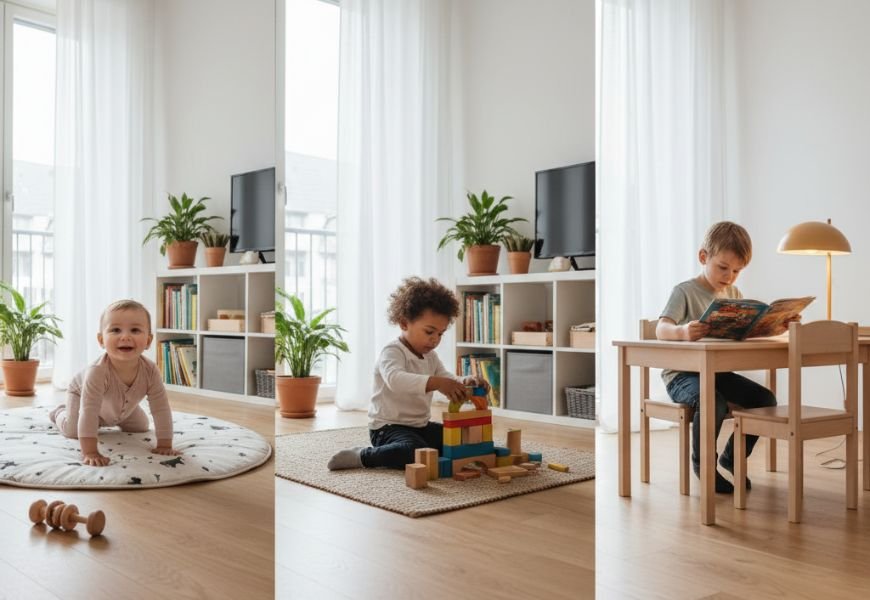
Early Childhood (3–5 years)
Focus areas:
- Rapid language growth
- Imagination and pretend play
- Shape and number recognition
- First friendships
How to support:
- Encourage creative play with art, blocks, toys
- Read stories together and discuss the characters
- Offer small choices to develop independence
Children thrive when they’re allowed to explore ideas freely.
Middle Childhood (6–12 years)
Focus areas:
- Academic and cognitive skills
- Teamwork and sports
- Self-esteem and confidence
- Emotional control
How to support:
- Show interest in school without pressure
- Help them discover hobbies and skills
- Focus on effort rather than comparison with peers
Confidence grows when children feel capable and supported.
Adolescence (13–18 years)
Focus areas:
- Identity and personal values
- Critical thinking and planning
- Peer interaction
- Emotional maturity
How to support:
- Listen openly without judging
- Encourage responsibility with trust
- Promote healthy routines like exercise and sleep
Teens still need guidance even if they don’t always ask.
Why Play Matters More Than You Think

Play time helps children:
- Learn problem-solving
- Build social skills
- Improve motor skills
- Express emotions
- Reduce stress
A healthy balance includes:
- Free play: exploring without rules
- Structured play: sports, games, activities
- Outdoor play: boosts mood and creativity
If you want learning to stick, make it playful.
The Role of Nutrition in Development
A growing brain and body need nourishment. Diet affects:
- Attention span
- Memory
- Growth
- Immunity
Practical nutrition tips:
- Offer vegetables and fruits daily
- Choose whole foods over packaged snacks
- Serve water with meals instead of sugary drinks
- Involve kids in meal prep to boost interest
Good nutrition early in life leads to healthier habits later.

The Power of Environment and Routine
Children feel safest and learn better when life is predictable and positive.
Ways to create a supportive environment:
- Establish daily routines around meals, play, and sleep
- Provide a small learning space at home with books and toys
- Limit excessive screen time
- Encourage questions and curiosity
You don’t need expensive tools—consistency and attention matter most.
Signs of Developmental Delays
Every child grows differently, but early attention can make a big difference. Speak to a pediatric specialist if you notice:
- Lack of interaction or eye contact
- Few or no words by age 2
- Difficulty walking or playing with objects
- Loss of previously learned skills
Trust your instincts. Early help leads to better outcomes.
Simple Daily Tips for Strong Development
Try integrating these into your regular routine:
- Read together every night
- Sit down for family meals and conversations
- Assign small chores to build responsibility
- Praise effort and progress
- Practice patience and communication
Strong development comes from consistent everyday habits—not perfection.
Final Thoughts
Healthy child development isn’t a timeline to race through. It’s a lifelong journey shaped by small but meaningful moments. When you provide love, stability, nutrition, play, and emotional support, you’re building the foundation for your child’s future success.
Celebrate who your child is today while supporting who they’re becoming. And remember—your presence, attention, and encouragement are the most powerful tools in the world.